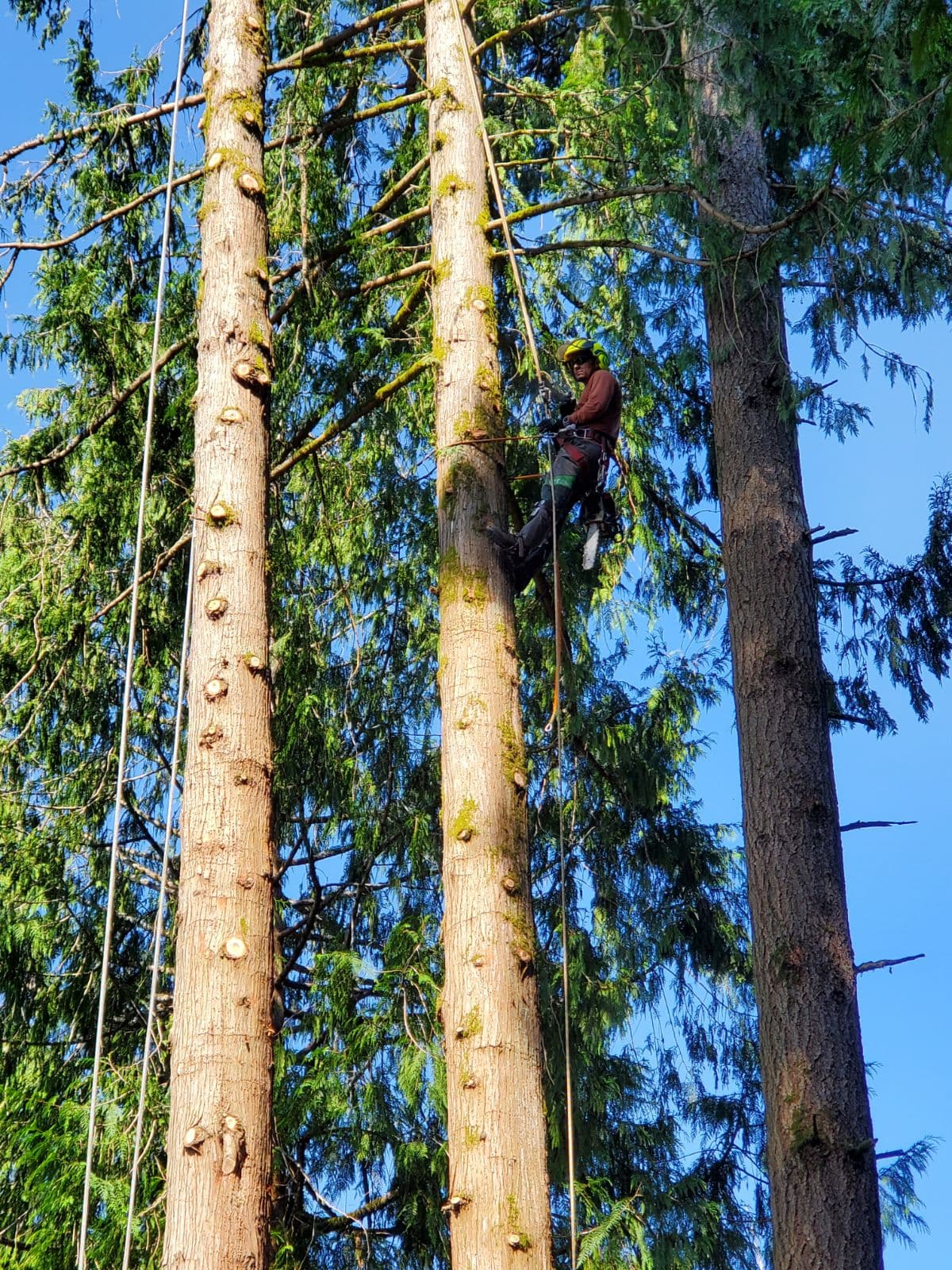
Professional tree pruning is far more than a simple cosmetic haircut for your landscape. At Lightning Tree Service LLC, we treat every cut as a biological intervention. In the Pacific Northwest, understanding the seasonal cycle of your trees is the difference between a thriving canopy and a hazardous one. Pruning at the right time—typically during the dormant winter months or early spring—allows the tree to direct its energy toward healing the "wound" created by the cut before pests and diseases become active in the warmer months.
The Structural Integrity of the Canopy
When we perform structural pruning, we are looking for more than just dead branches. We identify "included bark" and codominant stems—essentially two trunks competing for the same space. Without professional intervention, these stems act as a wedge, eventually splitting the tree down the middle during a heavy wind event. By thinning the crown, we reduce the "sail effect." In high winds, a dense canopy acts like a solid sail on a boat, catching the wind and putting immense leverage on the root system. A professionally thinned tree allows the wind to pass through the branches, significantly reducing the risk of a total tip-over.
Promoting Long-Term Vigor
Proper pruning also facilitates better light penetration and airflow. This is crucial for preventing fungal infections like Anthracnose or Powdery Mildew, which thrive in the damp, shaded interiors of overgrown trees. When sunlight can reach the inner leaves and the ground below, the entire ecosystem of your yard improves. Furthermore, precision cuts promote the growth of "callus tissue," the tree's natural way of sealing itself. Improper cuts, often seen in DIY projects, leave "stubs" that lead to internal rot and hollow cavities. Trusting a professional arborist ensures that every cut is placed exactly where the tree can best recover, protecting your property value and the safety of your home for decades to come.
In addition to safety, pruning encourages fruit production and flowering. By removing old wood, you stimulate the growth of new, healthy shoots that will bear the brunt of next season's growth. Our team uses sterilized equipment to prevent the cross-contamination of diseases between trees, a detail often overlooked by non-professionals but critical for the survival of heritage oaks and ornamental maples.